Showing posts with label nature study. Show all posts

Wednesday, April 12, 2017

Signs of Spring...

 
Robins are singing ... what signs of spring are YOU observing? {Image credit (c) Ken and Nyetta, 2015 via Creative Commons}

Spring has sprung...

With the weather near 90 degrees yesterday, we have been enjoying hearing robins singing and other signs of spring nature activities the past few days. Open windows, fresh air, and daffodils... ahhh...

I spent some time taking inventory of our science plans for the spring, and wanted to share a few of the resources I was mulling over today:

If you're into citizen science projects, Journey North has some excellent lessons and projects you can do. The fun part is being able to say you are working on real research projects with people from all over the world! Check out the robins, songbirds and tulip test garden projects ~ even download their mobile app so you can log in observations on all the signs of spring while you're on the go in your area!

The Outdoor Hour Challenge provides great links to printables and resources to use in nature study. A free subscription gets you the monthly newsletter delivered right to your inbox. This month's focus is on spring ephemerals and other early spring wildflowers that are signs of spring in so many parts of the United States. Consider a membership to gain access to enough materials to fill your science needs for the entire year, for the whole family.

quartz1
We're also creating a unit on crystals for this month... Stay tuned for more details!

What signs of spring are you observing now?

Leave a comment below, and tell me how you know that spring is on the way, where you live!

Wednesday, August 10, 2016

Welcome to "A Child's Garden!"

Hello, friend! My name is Kim, and I am so glad you stopped in at "The Garden."


What You'll Find in "A Child's Garden..."


http://kimbennett.blogspot.com/2011/09/september-study-1-antstermites-and-ant.html
"Ants, Termites and Ant Lions"
Here on my blog, I will share a lot about me, my family, and the things that make my heart glad!
  • ideas and plans for homeschoolers, including sample schedules
  • tips on balancing homeschool, home life and a home-based business
  • celebrations of our spiritual life as missionaries
  • helpful hints and articles for being a better science teacher, including a list of nature study ideas
  • posts on ways to teach history through a hobby (in our case, geneology)
  • free stuff, stuff for sale, and so much more!
http://kimbennett.blogspot.com/2011/08/hummingbird-sphinx-moths.html
"Hummingbird (Sphinx) Moths"

 On occasion, your journey might take you temporarily out of the "Garden," onto one of my other websites. Fear not! You can use your back button to get back to the "Garden" from the other website.{This is only a temporary situation as I reorganize my posts from my blogs ~ thank you for your patience!}


Keep scrolling through this welcome page to see what examples of what you can find on my website! {Don't forget to check out the sidebars for some other great content and links, too!}


Popular Posts 


To get you started, there are links to some of my most popular posts next to the images on this page ... just click on the caption...

http://kimbennett.blogspot.com/2011/08/experiments-in-flight-lift-thrust-and.html
"Experiments in Flight"
http://kimbennett.blogspot.com/2011/07/dandelions-bilingual-lesson-on-plant.html
"Dandelions: A Bilingual Lesson"

http://kimbennett.blogspot.com/2011/09/citronella-ants-go-marching.html
"Citronella Ants Go Marching"
http://kimbennett.blogspot.com/2012/02/teaching-science-and-nature-through.html
"Teaching Science Through Literature"
http://kimbennett.blogspot.com/p/how-we-conduct-nature-study.html
"Nature Study"
http://kimbennett.blogspot.com/2012/04/scheduling-zoology-1-flying-creatures.html
"Scheduling Zoology 1: Flying Creatures"


You Don't Want to Miss New Posts!


Use the Subscribe Here! Box in the Sidebar to have new posts delivered right to your inbox!


Saturday, July 12, 2014

"An Apple a Day" Notebooking Pages


{First published in "Books and Blooms," 7/12/2012}

Right now, in New England, we've pretty much finished picking strawberries, and are now heading into blueberry season. It will be a minute before we will be out collecting bags of apples.

But I noticed at Wal-Mart the other day, that there are shelves and shelves of notebooks and lunchboxes on display, and I just got my son's school supply list from his fourth grade teacher, so can September be too far off?

For those of you preparing curriculum for the fall, come see my new science journaling pages.

"An Apple a Day" is the first in a series of science journaling pages that follows the  apple tree throughout the year. This first set focuses on the formation of the apple fruit from the flower.

The next set will focus on the fall colors of fruits and leaves.

For more information, see the Store at Simple Science Strategies.

See Simple Science Strategies for details!


Tuesday, June 10, 2014

Winged Garden Visitors

"My beloved has gone down to his garden, to the beds of spices, to pasture his flock in the gardens, and to gather lilies." (Song of Solomon 6:2)

---------------------------------------------------------------


Over a single day last week, there was an influx of all kinds of interesting moths to the garden. I took pictures of a few of them that sat still long enough. Here are my visitors:


Harnessed Moth [(c) 2012 Kim Bennett]

Rosy Maple Moth [(c) 2012 Kim Bennett]


Common Gray [(c) 2012 Kim Bennett]
Great pages for insect study!

Stay tuned for nature studies on moths and butterflies in future posts on "A Child's Garden."


Happy moth gardening!


Monday, May 19, 2014

Birdies, Butterflies and Blooms

"Every word of God is pure: He is a shield for them that put their trust in Him." (Proverbs 30:5)


Love that fuschia!


I was sent to Home Depot the other day to buy new blades for the weed whacker. I told my husband that this hanging fuchsia somehow got into my cart and I must have accidentally paid for it, because, LOOK! here it is in my trunk!


My husband just smiled. He lets me play with plants, because it's a lot cheaper than most vices folks might have, it makes us happy, doesn't get anyone into trouble, and makes us feel like we are continuing where Adam and Eve should have left off.


We like to sit on our front porch in the evening. There is a common "green" with a little gazebo in it, in the center of our neighborhood. All the children (and their parents!) congregate there for frisbee golf, cookouts, guitar and drum practice, and general fun. So we hung our hanging baskets on the front porch.

Within a day, the hummingbirds found the basket! My husband enjoys them immensely, commenting on how loud their wings are when they whiz past your head, and how unafraid they are.  It makes me very happy to see them.


I have written in the past about other flowers that attract wildlife. See Humming (Sphinx) Moths for a list of other plants you can include in your garden, to attract birds, butterflies and other wonders.


Sunday, December 29, 2013

Scheduling Zoology I - Flying Creatures

Exploring Creation with Zoology I: Flying Creatures of the Fifth Day


$39 at Barnes & Noble (click here).
Exploring Creation with Zoology 1: Flying Creatures of the Fifth Day, by Jeannie Fulbright (Apologia Science, Young Explorers Series) is written for use with children grades K-6. It covers all the flying creatures: birds, insects, flying reptiles (pterosaurs), and bats.

The course includes several components:
  • The textbook (required)
  • The notebooking journal (highly recommended)
  • Lab kit (optional)
  • Daily lesson plans (optional)
  • Lapbook CD-ROM (optional)
  • Lapbook package CD-ROM (optional)
This page provides links to articles and resources to help you implement this textbook at home or in the classroom.


This post was submitted to the 2/11/13 Blog Carnival!


How We Came to Use Flying Creatures


We began using “Flying Creatures” when our youngest son was a second grader. We wanted a science text that went beyond nature study and observation to some other science process skills, and we fell in love with the rigor, balance and Christian foundation of the “Exploring Creation” books.

We purchased the textbook and notebooking journal. As the notebooking journal includes a lesson scheduler, I did not purchase the daily lesson plans. I also did not purchase the lab kit, as this course uses primarily items that you can find in your kitchen.

Donna Young's Homeschool Resources and Printables has Table of Contents Planners for every book in the Apologia Science series, including Flying Creatures. For information on how to use these planners to help you schedule and make lesson plans for this book, see "What is a TOC Planner?" I started out using the TOC Planners, but found that the schedule included on pages 8-10 of the Notebooking Journal were sufficient for us. So, if you purchase the Notebooking Journal, you may not need another planner for this course.


See my "Flying Creatures" Pinterest board for more resources


Planning for Use of Flying Creatures, by Lesson Number

Below is the Table of Contents for this course, with links to information on each lesson, and links to the way we implemented each lesson in our homeschool day. I will also continue to add links to our nature studies, as the topics lend themselves to nature study. Check back often, as I update the links.

This organization is helpful if you start and stop within a given textbook (as we often do), or have to suspend a course for a period of time, for some reason.
________________________________________________

Lesson 1: What is Zoology?
Lesson 2: What Makes a Bird a Bird?
Lesson 3: Birds of a Feather
Lesson 4: Flying Factuals
Lesson 5: Nesting
Lesson 6: Matching and Hatching
Lesson 7: Bats
Lesson 8: Flying Reptiles
Lesson 9: A First Look at Insects
Lesson 10: Insect Life Cycles and Life Styles
Lesson 11: Social Insects
Lesson 12: Beetles, Flies, and True Bugs
Lesson 13: Interesting Insects
Lesson 14: Order Lepidoptera 


More With Flying Creatures: Planning, by Month


The Notebooking Journal splits each Lesson over four sessions (2 per week), with the first session of each week mostly the hands-on portions and the second session being journaling activities. Our son loves the experiments and explorations, but the prospect of a whole day of journaling was daunting to him as a 2nd grader. We also enjoy more extended and frequent nature study, using the Outdoor Hour Challenges and other activities – we wanted more time for that, and less time per day spent inside working on notebooks. When we counted the actual number of tasks for the course, there were enough activities to do one per day, and allow more time for outdoor study – a solution that worked better for us. 

Here is a look at this way of scheduling Zoology I, which may be helpful for those of you who want to connect it to monthly nature studies.
________________________________________________

Click on the links, above, to see related materials and nature studies for each lesson or month. See also my Pinterest Board, “Flying Creatures of the Fifth Day,” where I post links to helpful resources for use with this course.


Some "Flying Creatures" That Are NOT in This Textbook


Online Resources to Use with Flying Creatures

We have found these two websites to be extraordinarily helpful when studying our feeder birds and doing independent studies on birds:

"All About Birds" - from the Cornell Laboratory of Ornithology in Ithaca, New York. A vast resource full of videos, photos, drawings and audio clips to help with bird studies and ID in the field.

"What Bird" - from the Mitch Waite Group. An amazing online field guide that actually uses audio recordings from the "O Lab" (Cornell Laboratory of Ornithology). A bit more ad-laden that "All About Birds," but we like to tab both of them and go back and forth between the two.


Contact Us!

Let us know if there are other resources that would be helpful for you, as you study with Flying Creatures, and we'll be glad to link them up here. Just drop a line in the comment box, and I'll get right back to you!


Saturday, May 11, 2013

Studying Amphibians in the Field: Using Approximate Measures

Red Eft, the immature form of the Spotted Newt. (c) Kim M. Bennett, 2013.


Frogs and Toads and Salamanders... Oh, My!


Here in Connecticut, we have just come out of the April showers that were not.

Oh, we had wonderful, almost summery temperatures, and the buds began to break. But, without any measurable rain in April, almost everything remained frozen in time, waiting. The spring peepers we wrote about in the last blog post grew a bit subdued in their calls, not having anywhere to lay their eggs. The peas and lettuces that we early gardeners planted begged for water to carry them through what is normally our rainy and wet time of year.

But we have rain this week! And, with that rain, spring is bursting forth rapidly! The amphibian friends that have grown rather hidden over the past few weeks are coming out in droves now.

Our frogs and toads broke onto the scene early this year, with a few brave spring peepers coming out during a warm snap in February, and our woodland frog and toad species making their debut last month (we haven't gone down to the pond to check out the more aquatic friends, yet... Stay tuned.) This month marked the first month we have seen salamanders.

Our Amphibian Survey: May 2013

Here is a photo gallery showing our survey of amphibians, to date:


Our amphibian survey, May 2013. (c) Kim Bennett, 2013.

We created this survey form so we can observe the changes in the seasonal distribution of the amphibians in our area, over time, as well as to chronicle the seasonal patterns in each specific species over the course of a year. We like having all of the information on one sheet, which is posted on the refrigerator.

Even the adult children take part (the photo of the red eft, above, is courtesy of #2 Son, the Animal Whisperer, who dashed over to our house early [I mean EARLY] one morning after finding the little fellow in his driveway as he left for work).


To get an idea of the relative number of frogs, toads and salamanders in our area, we decided to color code our entries so we could know, at a glance. Besides, at least two of us in the house (probably more) have a fascination with those 16-color Flair packs they sell in Staples.

Did I ever tell you I have a thing for office supplies? I think it goes along with being a teacher.

While there are three main groups of amphibians here on our chart, they actually are divided into the following groups, taxonomically [click on the name to see a photograph of a representative species - or the link, if we've already written about it]:

  • Mole salamanders (here is our post on the Spotted Salamander that the Plantsman rescued from the road one night after work)
  • Lungless salamanders
  • Mudpuppies
  • Newts (see the image at the top of this post, courtesy of the Animal Whisperer)
  • Toads (here is our last post, showing a photo of a Fowler's Toad that was strolling across the driveway)
  • Treefrogs (there's a great video showing Spring Peepers on our frog survey post)
  • Spadefoot Toads
  • True Frogs (here's a little Wood Frog that somehow ended up in our living room) 


Since tree frogs are arboreal, often the only way that you can observe them is to learn their call. When we identify a frog (or a bird, for our bird list -- especially our owls) by call, we mark the entry with a (c).

The Animal Whisperer found a Gray Tree Frog once and brought it to show us. We considered that a treat, since you are not likely to actually see them, most of the time. They were a lot bigger than I expected them to be -- not tiny like Spring Peepers.


It's always good to have a site that you can go to, to listen to calls of animals. Connecticut Amphibians has excellent photos, descriptions, and audio files to help folks in our state learn more about the amphibians here.  They also have a great discussion of the importance of vernal pools to our local amphibian species, something that is an important part of any amphibian study, no matter where you live. -- [Here is an image of a vernal pool in the nature preserve near our home] -- The Yale Peabody Museum of Natural History has a lot of great information, as well, but no audio files.

Measuring Amphibians


In our home, as well as in my classroom, we learn to handle wildlife gently, if at all, observe creatures for a short time and in a respectful way, then turn them loose. So we have to learn to observe them very carefully when we have them, so we can compare later. Having a digital camera is a wonderful asset to both homeschool and classroom, when it comes to reflecting on and studying things that we can't really hang onto for a long time.

If you are going to use digital images as a way to observe animals, try to make sure that you snap them with something in the frame that shows scale. See the images, below, for ideas:


This photo from  "Frog-Hunting in Connecticut" shows a Fowler's Toad in the parking lot. I waited until it hopped closer to the parking space number (most of us can visualize how big those numbers are -- about a foot tall) so you could get an idea of how very large the toad actually was -- about 6 inches long, although adult Fowler's Toads can be up to a humongous 9.5 inches long! Wow!

I considered getting a ruler to place alongside the toad, but my dog was so excited about the toad that I was afraid 1) the toad would be startled and hop away or 2) the dog would try to eat it.


Here's a great way to get a pretty accurate measurement of your amphibian, if it's one that slows down enough for you to gently pick it up.

The fingertip joint of an adult's first finger is about an inch long. Actually, this joint, even in a child from about the age of 8, on, is about an inch long. I used to teach my third graders to use their first finger joint as an approximate measure, if they didn't have a ruler. In this photo, you can use this measure to estimate that this little eft (which is probably on the large side, for efts) is about 3 1/2 inches long, from nose to tail tip. Red efts range from 1 1/2 to 3 1/2 inches long.


Here's that photo of the Spotted Salamander from "A Night-time Surprise: Spotted Salamanders", showing another visual cue you can use to estimate the size of one of your amphibian friends.

My son was carrying the salamander from one side of the road to the other, in the front of his tee-shirt. In the photo, you can see the hem of his shirt. If you are wearing a tee-shirt now, check out the hem at the bottom. If it's a regular shirt, the folded over and stitched part will be about an inch wide. Accounting for the semi-curled up nature of the little fellow, we can estimate its size to be about 8-9 inches long, from nose to tail-tip, so it's probably an older member of its species, which range from 5 inches to 10 inches long, depending on their age. They can live up to 10 years, if they don't get run over during breeding season.

Data Sheets and Notebooking Pages, for Your Amphibian Studies

In the last post, I shared a link to "Animal and Plant Surveys: 10 Reasons to Get Outside and Survey," which explained the science behind surveys as a learning task. I also included links to blank survey sheets, such as the one I showed, above, which you can use to keep track of your animal species.

An amphibian study is a great opportunity to compare animal species, too. For one way to study comparison using an interactive bulletin board, see "Comparing Nests: The 'Same and Different' Center."

There are many sources of Venn diagrams (all kinds of varieties). At  {.docstoc}, you have many to choose from, all downloadable, free of charge.

We download a lot of our general nature study pages from The Notebooking Treasury - we have been members since we began homeschooling in 2010. From now through May 31st, 2013, they are having their NotebookingPages.com 7th Birthday Sale-a-Bration Event, with discounted merchandise, chances to win prizes, and specially priced memberships (for new members) and membership extensions (for current members).

Become a Notebooking Pages LIFETIME Member (as we are) during their NotebookingPages.com 7th Birthday Sale-a-Bration Event, and you get all this:
  • Save $25 on your membership
  • Receive access to 150+ current notebooking products
  • Receive ALL future notebooking products
  • Receive up to two years FREE access to their notebooking (& copywork) web-app, The Notebooking Publisher™
  • Receive a $100 e-gift Bonus Bundle from various homeschool publishers
  • Earn a chance to win some great prizes … an iPad mini, $100 Amazon.com gift card, LIFETIME access to The Notebooking Publisher™, and a LIFETIME membership to MomsToolBelt.com.

How could you resist?


Try Our Amphibian Study Pages - FREE!

During the next four weeks, you can enter to win a copy of My Amphibian Survey, a 36-page e-Book full of notebooking pages, centers ideas and curriculum extensions on amphibians. Two lucky contestants will get copies of this e-Book. Also, in honor of springtime, we are raffling off one copy of Nests, Nests, Nests! - our fall e-Book on nests of all kinds of animals (including amphibians) for one lucky contestant. Just enter using the Rafflecopter Form, below.


a Rafflecopter giveaway


Wednesday, April 24, 2013

Frog-Hunting in Connecticut: Our 10 Frog Species

Jumping Jehoshaphat! It's Frog Season!

After what seemed like an incredibly long winter here, we finally have the most spectacular spring weather ever! Patio tables are being dusted off and set up, little cell packs of potting soil are showing up on people's front steps after work. Kids have ditched long pants for shorts, and knees are going to school skinned.

This month's Outdoor Hour Challenges have been studies of reptiles and amphibians, and I almost thought we wouldn't be able to participate! While it's still a little cool for our reptile friends to show up, there are signs of amphibians all around.

Sing a Froggy Song...

WAY back in February, we had a brief warm period -- warm enough to leave the sliding door cracked so the cats could run in and out at night. On one of those nights, when we were walking our dog before bed, we heard a familiar, but very lonely, spring voice...


Spring peeper (Pseudacris crucifer) [Credit: Potomac Overlook Park, 2012 via Creative Commons]


I guess one little fellow thought he'd brave the elements and get a jump on the cutest spring peeper girls.

Now that we have temperatures in the 40's and near 50 most nights, we hear the wonderful chorus every night.

Other fun facts about spring peepers:
  • My Caribbean friends say that our spring peeper is very much like the little coqui that folks from Puerto Rico love so much. 
  • The call of the spring peepers is affected by air temperature. The warmer the air, the more "peeps" per minute. The Audobon society has a great article all about the song of the spring peeper.

Frogs, Toads and Other Nighttime Friends

If you limit your nature study to daytime, you are missing lots of cool stuff! In fact, some of our best nature study happens by accident, when we are walking the dog before bedtime. Not long ago, as I waited for Lucky to find just the right spot in the woods along the driveway, I heard a deep snort. Not really wanting to find out if it was a young black bear (they demolish bird feeders in our town on occasion), or a buck that got surprised by the dog, we quickly found a more well-lit place to hang out. But what a story we had to tell when we got back in the house!

So, on one of these evening sojourns last week,  we spotted the biggest toad I have ever seen, not hopping, but lumbering, first left front and right rear leg, then right front and left rear leg, across the driveway. The dog thought this was the most exciting thing next to a cat running by -- but I didn't let him catch the toad, because toads secrete something from their skin that makes potential predators vomit.


Fowler'sToad, Bufo fowleri. [Photo credit: Kim M. Bennett, 2013]

We have so many toads where we live, that you have to take a flashlight when you walk down the drive at night, or you might step on one. During the day, they burrow under the woodchips in my flower bed. I have more than once been surprised while working in the flowers, when the ground erupts suddenly and hops away!


[One of my kids' favorite books when they were very young...]


Froggy Went A-Courtin'...

My youngest son discovered a pond deep in the woods. Since the weather is going to be rainy tomorrow, then nice on Friday, we expect there to be a lot of frog activity over the next few days. So we're gathering our frog egg collecting materials to be ready.

We have a huge crop of skunk cabbage in the woods, which tells us that these are low spots that often collect water. If you have a low spot that is wet every spring, it may be a vernal pool. My eldest son, the naturalist, says that you can tell a vernal pool from a generic wet spot, because the leaves are gray and washed out, and look dusty during dry times of the year.

Vernal pools are important for amphibians, since all of them (that live in Connecticut) depend on water for their larval stage. Larger vernal pools are also frequented by migrating birds in the spring. These pools don't have to be very big, but, in our town, they are important enough that builders are not allowed to build over them.

When you walk in the woods, look for skunk cabbage, and ground that seems spongy and soft. After rains, check here for amphibian eggs.


Vernal pools are important habitats for amphibians. [Photo credit: Kim M. Bennett, 2012]

Our Frog Survey

There are ten frog and toad species native to Connecticut. Next to each, I have marked them to indicate their status (per the Department of Energy and Environmental Protection):

E = endangered
T = threatened
SC = special concern 
D = declining
S = secure
U = uncertain
I = introduced

  1. Eastern Spadefoot (E)
  2. Northern Leopard Frog (SC)
  3. Gray Treefrog (D)
  4. Wood Frog (D)
  5. Eastern American Toad (S)
  6. Fowler's Toad (S)
  7. Northern Spring Peeper (S)
  8. Bullfrog (S)
  9. Green Frog (S)
  10. Pickerel Frog (S)

It makes me sad to see some of our froggy friends on the decline or endangered. Amphibians are so very sensitive to environmental changes and toxins.


Wood frogs occasionally hitch a ride into the house, on the sliding door. [Photo credit: (c) Kim M. Bennett, 2012]


We adapted our animal survey to use for our amphibian work this month. So far we have three critters on the list:
  • Northern Spring Peeper (Pseudacris crucifer) (Feb/Mar/Apr)
  • Eastern American Toad (Bufo americanus americanus) (Apr)
  • Wood Frog (Rana sylvatica) (Apr)
 
We'll keep track of each month that we see each species, to get an idea of their patterns in our area, adding to the list as they wake up for the spring.

If you'd like a copy of the survey sheet, click the link, below. Check out the "FREEBIES" tab for other pages we have made available for free.

See also "Animal and Plant Surveys: 10 Reasons to Get Outside and Survey" (Simple Science Strategies) for more on the use of surveys in nature study.


This post was linked to the following great carnivals and link-ups:


 Top Ten Tuesday at Many Little Blessings Hip Homeschool Hop Button 


Wednesday, January 9, 2013

Starting an Animal Survey: Winter Birds and Friends

Watching Our Birds, All Year Long


We love to watch our birds. With each season, we change our offerings to suit the birds that come with that season: suet for the woodpeckers in the winter; berries and peanuts for the bluebirds in the spring; oranges for the orioles in June; hummingbird nectar for the hummers in July.

It is exciting to see those birds (and other creatures) that signal changes in the seasons. To chronicle the visitors in our yard, we started a year-long animal survey to usher in 2013.
Our survey sheet -- good for a year of viewing! (c) Kim M. Bennett, 2012

We put together an animal survey sheet, where we can list the visitors to our bird feeders, brush pile and water sources, then check off which months we have observed them. To mark shifts in populations, we are entering a number to show the greatest number of each species observed at any given time (similar to what is done to measure relative quantities of birds in Cornell's Project Feeder Watch).

(Click on link to download a copy for your own study.)


The First Week of Our Survey

The first week of January was a busy one. Here is our list of animal visitors (not counting our own pets, of course -- wild animals, only!), in decreasing order of their abundance (NOTE: We noted the maximum number of each animal that was seen at a given time, to monitor the relative abundance of the species for each month):


Dark-eyed juncos were our most abundant visitors this week.
  • Dark-eyed junco (7)
  • Black-capped chickadee (6)
  • Tufted titmouse (4)
  • White-tailed deer (4)
  • White-throat sparrow (4)
  • Blue jay (2)
  • Great horned owl (2)
  • Mourning dove (2)
  • Carolina wren (2)
  • Northern cardinal (2)
  • Chipping sparrow (2)
  • Gray squirrel (2)
  • White-breasted nuthatch (1)
  • Red-bellied woodpecker (1)
  • Downy woodpecker (1)
  • Northern flicker (1)
  • White-crowned sparrow (1)


Nifty Sightings for the Week

Click on the link for more information.
I always love having the chickadees perch inches from my nose and scold me when the feeder runs out of seeds. But there were some other noteworthy observations this week:

... the junco with leucism -- partial albinism that caused its head and cheek feathers to be completely white, and its sides to be tan in color {my youngest son and I spent a lot of time trying to identify it with our field guides before I found a web article about this form of albinism};
... the great horned owls who perched in the hickory overlooking the feeding area during the night time hours and into the dawn, hooting and hunting {our cats are not happy about being kept in at night the past few weeks};
... the pair of wrens that we watched exploring the inner depths of a folded camp chair on our front porch (you know they'll nest anywhere). {My eldest son and I sat in the car after going to the gym, so we wouldn't disturb the busy pair}


What We Offered Our Feathered and Furry Friends

Click on the link for more information.
We had run out of black thistle seed, so we had filled both our tube feeder and the regular feeder with mixed seed, and placed some stale pancakes in a suet feeder (as an alternative to putting them on the ground, which attracts our own dog before the outdoor critters get to the food). We bought some berry-flavored suet dough (loved by the titmice), and threw bread crusts out on the ground.

Read-Alouds to Go With Your Studies

Our two favorite animal books, the Burgess Bird Book for Children and the Burgess Animal Book for Children, are shown here. Click on the links in the captions for more information about these wonderful classics.

[This post was linked to the following blog carnivals:]

Outdoor Hour Challenge ~ Winter Bird: Chickadee
Simple Science Strategies:  Patterns
A Carnival of Homeschooling


Monday, November 19, 2012

My First Ten Book Additions to Shelfari!

I discovered Shelfari on a friend's blog just moments ago...

So my weekly edition to the Top Ten Tuesday Blog Carnival is my...

First Ten Books on Shelfari!

Top Ten Tuesday at Many Little Blessings

These happen to be the books we are using for homeschool studies (with the exception of two, which don't show up on Shelfari). If you are new to homeschooling, we would highly recommend these as additions to your library.

Now that I know how to "work" Shelfari, I will be adding other books that we have read (or are reading) for homeschool. So check back often!

Look for the widget on the sidebar (you can't miss it -- it looks like a bookshelf!). Or check out the widget in this post (below). Want your own bookshelf? Check out the link at the bottom of the widget. It's so easy, and updates as you add books. You can filter what is visible by tags (in case you only want your bird books to show, for example), by whether they are on your wish list or are ones you already have read... Very versatile.


Wednesday, November 14, 2012

Ten (10) Fall Nature Studies: What the Leaves Have Kept Hidden

Fall sunrise in Connecticut (c) Kim M. Bennett, 2011


We have been enjoying exploring what the leaves of summer have been hiding from us for the past several months. Here are some of the surprises and interesting finds from the past week or so -- each one a potential in-depth study for the next month.


Top Ten Tuesday at Many Little Blessings

1. Lichens & Mosses

These can be harvested to make terrariums, even in the fall. Interesting questions that can be explored, even in the cold seasons:

  • Do mosses really grow more on the north sides of tree trunks?
  • What kinds of lichens grow in my area? Where do they grow?
  • What is a lichen, exactly?
  • How is the life cycle of a moss like that of a seed-bearing plant? How is it different?
  • How do mosses and lichens fit in an ecosystem? Are they producers (they are green, after all)? Are they consumers? Are they decomposers?

Barbara McCoy has a great lichen and moss study at the Handbook of Nature Study.


British soldiers lichen (c) Kim M. Bennett, 2012

2. Bark & Vines

Last fall, we took advantage of an unseasonably warm day in early March to take a "bark walk," studying the vines and bark of the trees on the nearby Blue Trail. Either one of these could be a huge study. We ended up focusing on the many faces of the ubiquitous poison ivy on our bark and vine walk.

Poison ivy, or other bark & vines, make a great fall nature study. (c) Kim M. Bennett, 2011

3. Owls

We have been enjoying hearing the owls of Connecticut, right in our backyard, for the past couple of weeks. We are all early risers, so we are serenaded each morning, from about 4:00 a.m. until sunrise, by great horned owls and long-eared owls, and regularly encounter owls silently swooping over the roads when we drive in the evenings.

We use the Apologia Science Exploring Creation series with our youngest son, and found that All About Birds, a web page from Cornell Univerity's Laboratory of Ornithology, makes a great accompaniment to the Flying Creatures of the Fifth Day textbook. Read more about owls, and hear owl calls.

In the November edition of the Simple Science Strategies Newsletter, we feature books in the One Day series, by Jean Craighead George, nature writer and children's author. Here is another novel, with a nature theme, that was always a favorite of my students and my own children, by the same author. Click on the image, for ordering information.
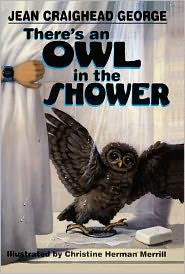

 
 Barnes & Noble, $16.00


4. Buds

When I taught horticulture students at The Ohio State University, we had three plant identification courses: woody trees and shrubs (a fall class), evergreens and winter identification of trees and shrubs (a winter class), and herbaceous plants (a spring class). In the winter, we would revisit previously learned trees and shrubs, only using their habits, twig markings and buds to identify them. Very challenging!

Winter buds can be very colorful, as well. Certain shrubs and trees that bloom very early in the spring can be cut in the late fall and winter, and brought inside to force the blooms open.

Champaign County (Illinois) Cooperative Extension Service has a nifty pocket guide on winter identification of trees and shrubs. The .pdf is full color, and also teaches about leaf and bud arrangement (did you know that there are only a few woody species with an opposite leaf arrangement?).

Colorful buds challenge our identification skills in fall and winter (c) Kim M. Bennett, 2011

5. Fruits and Berries

I love cutting wildflowers to bring inside after our nature hikes. In the fall and winter, I cut branches with fruits and berries, or colorful buds, instead. Last fall, I cut some multiflora rose branches with "hips" (berries), and put them in a vase on the kitchen windowsill. They rooted! No wonder it is an invasive species...

If you are a birder, it is interesting to notice which plants attract birds to your yard in winter. Some plants, like hollies and winterberries, are full of bright red fruits, but the birds only eat them very late in the winter and early in spring, when they absolutely have to. Others, like blueberries, barely get a tinge of blue before they are stripped bare by all kinds of wildlife.

If you decide to study the fruits, download a set of my "Apple a Day" notebooking pages to go along with your study.


Colorful fruits and berries brighten the fall landscape. (c) Kim M. Bennett, 2011

6. Old Birds' Nests

We often suspect that we have nesting birds in the yard, because we see mom and dad and their little ones coming to the feeder in the summer, or we watch adults zipping back and forth with wriggly snacks in their beaks.

In the fall, when the leaves have fallen, we can often spot exactly where the nest was, as its hiding place is revealed. Sometimes, fall and winter weather, such as our recent hurricane, blow nests from their hiding spots, so we can study them up close.

One fall, my older boys collected a series of nests on our screen porch. This is a great nature activity when the outside world seems to be sleeping. A word of caution: do not bring the nests inside, as most wild birds are full of mites, which infest the nest, and are definitely NOT something that you want to wake up from their slumber in your house, as they warm up inside. Consider getting a field guide just about nests, to add to your field guide collection. (I love the Peterson guides... Click on the image for ordering information. )
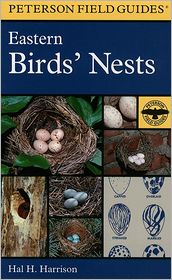

Barnes & Noble $20


Did you know that...
  • Robins use grass and mud to make their nests, but the amount of mud varies with the weather, from nearly all grass if the weather is dry, to full of mud, when things are rainy?
  • Great-crested flycatchers almost always include a snakeskin in their nest cavities? (No one really knows why)
  • A male Northern oriole starts his nest, a bag of woven grass that hangs high in a tree, and uses the beginnings of the nest to lure a female as a mate?
  • Tufted titmouses line their nests with fur, even plucking hair from unsuspecting animals as they go about their daily affairs?
  • Hummingbirds make their tiny nests from lichens and spider webs?
  • Bald eagles add branches to their massive nests each year, until the sheer weight of the nest, or bad weather, topples it?
  • Crows, normally raucous and boisterous, fly silently to their nests, to avoid detection by predators?
  • Blue jays like to weave colorful bits of trash and other "finds" into their nests?
  • Mourning doves create a disheveled nest from loosely piled twigs and leaves?
  • Turkey vultures lay their eggs on a bare rock ledge?
  • Towhees create a nest in a leaf-lined depression on the ground?


Our oriole friends hide their nest high in a tree -- Hurricane Sandy blew last year's down for us to study. (c) Kim M. Bennett, 2012.

7. Rock Walls

Living in New England means there are plenty of old rock walls around. The Puritans and other early European settlers found that planting and building anywhere in the Northeast meant dealing with the stones and boulders left by all those glaciers from the Ice Age. They placed these stones, called glacial erratics, in rock walls around their homesteads, where they remain to this day.


Rock walls teach about the settlement, and geology, of New England. (c) Kim M. Bennett, 2011


$16.95, Barnes & Noble
Stone Wall Secrets, by Kristine and Robert Thorson, and illustrated by Gustav Moore, is a beautifully illustrated book that teaches about the geology of New England, and the culture of the ubiquitous stone walls of the area. Author Robert Thorson, a geologist at the University of Connecticut, has been studying the stone walls of New England for decades, learning about the people who built them and the bedrock which created them. It's a great "go-along" for a fall study of stone walls. For more information on this book, click on the image, at left.


8. Mounds and Pits

In September, we learned about the "One Small Square" strategy, a technique for making observations about the plant and animal life, as well as the abiotic factors, in an ecosystem. This strategy can be used to examine the differences between two unique microecosystems: mounds and pits.

Mounds and pits are formed when trees topple over then decay, over time, creating a mound where the exposed root ball once was,  and a pit where it pulled out of the ground. These two areas often have different soil structure, and different plant and animal life. Autumn is a nice time to begin a study of mounds and pits, examining them when only evergreens are growing, and repeating the study on a monthly basis. Consider using the fall and winter months to map out fallen trees or mounds and pits, for future study. Practice using coordinates to map them out.


Mounds and pits form when fallen trees decompose. (c) Kim M. Bennett, 2011


9. Cones

This month, one of our studies involves comparing and contrasting evergreens and deciduous plants. Among the evergreens you will likely encounter in your studies are the cone-bearing plants, or gymnosperms. Cones make for an interesting nature study in the fall, as each type of gymnosperm has a unique type of cone, and the cones, themselves, change over time.

We like to collect pine cones from the white pines in our neighborhood, and make peanut butter and seeds feeders for our bird feeding station -- read about this in "Winter Bird Feeding."


Collect pine cones for autumn decor or making bird feeders. (c) Kim M. Bennett, 2011

10. Animal Tracks

Last week, we had our first snow storm of the season, when Storm Ari dumped 4-12 inches of snow over the state of Connecticut. Enjoying our first snow day, my youngest son and I went outside to re-load the feeding station and clean snow off things in the backyard.

We delighted in looking at the dainty little bird tracks in the snow on the hood of the gas grill, and the scuffle of prints over prints under the feeders.

Muddy ground or snow-covered surfaces provide an opportunity to study animal tracks. Check out "Follow Those Tracks!" for more information about tracks, scats and signs left behind by animals.


Study animal tracks by making plaster casts or taking photographs. (c) Kim M. Bennett, 2010

Share...

These are just some of the many studies we have been drawn to in the fall. We would love to hear about your fall finds, and the things that caught your eye as you explored outdoors this month.  Please make sure that you link up your blog post on the November Simple Science Strategies Blog Carnival.  Add a link to this post and the blog carnival in your blog post, too.

Have a great fall!